Latest posts
-
How to Create an AI Confidence Labeling System So Uncertain Information Does Not Look Like Verified Fact
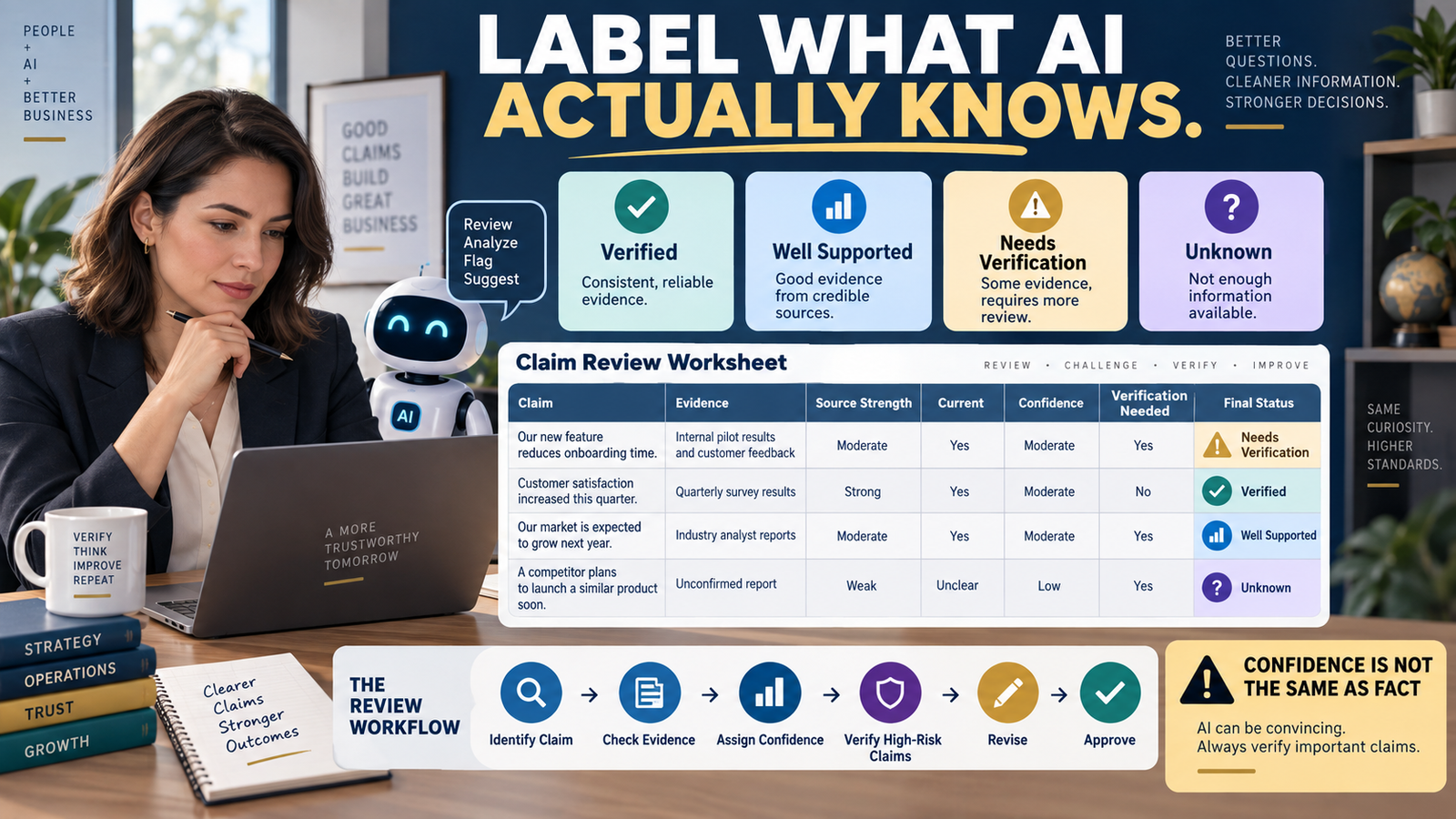
AI often writes uncertain information in the same polished tone it uses for well-supported information. That creates a problem. A statement based on: can sound almost identical to a statement based on: If you are using AI for business decisions, research, articles, comparisons, or product planning, those differences matter. A simple AI confidence labeling system…
-
How to Add Human Review Checkpoints to an AI Workflow Without Reviewing Everything Twice
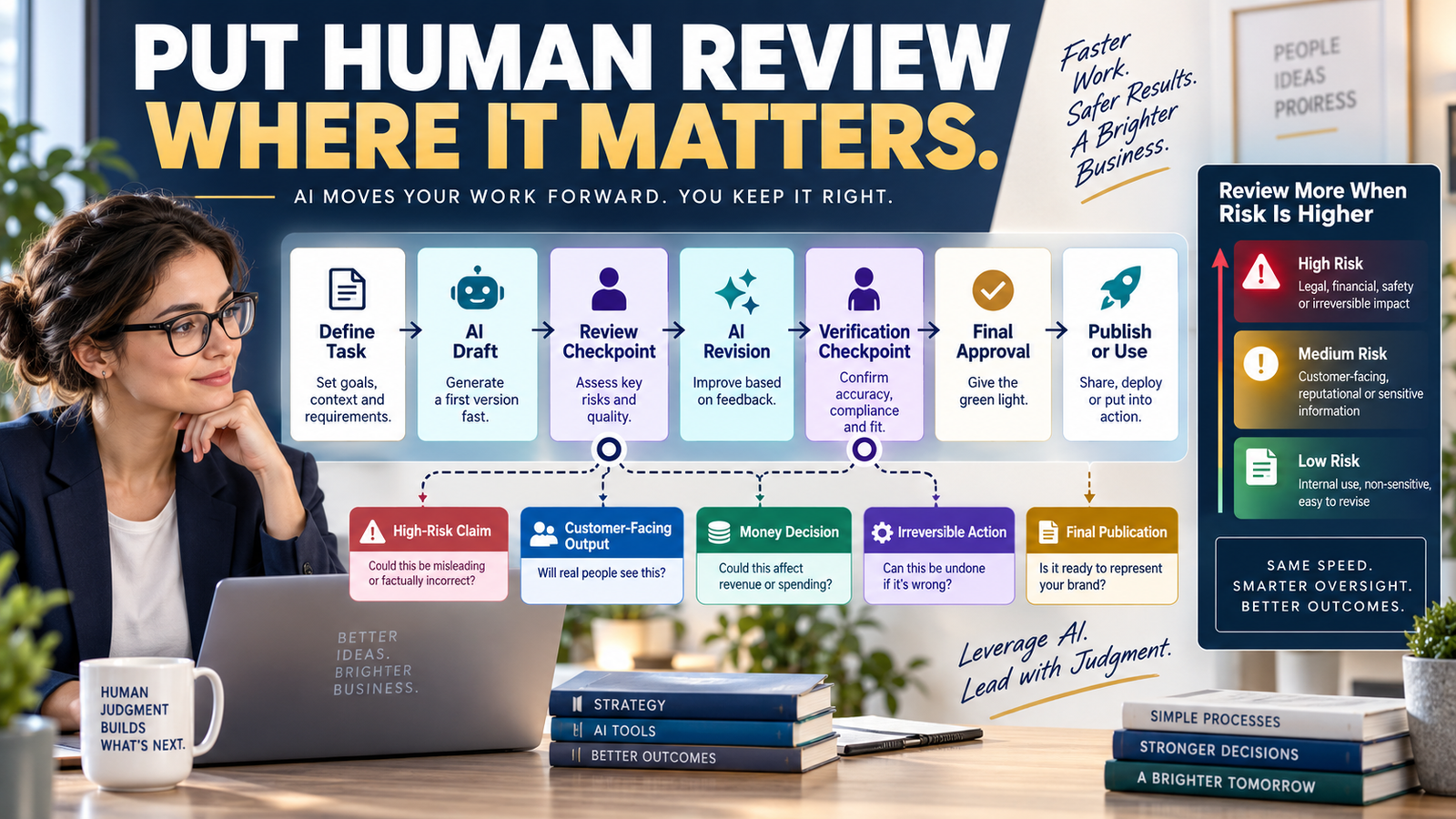
AI can save time by drafting, organizing, comparing, summarizing, and transforming information. But there is an easy way to lose much of that time savings: Review every AI step as though you were doing the entire task manually. If AI writes ten sections and you completely rewrite all ten, the workflow has not created much…
-
How to Create an AI Assumption Checklist Before You Act on an AI Recommendation
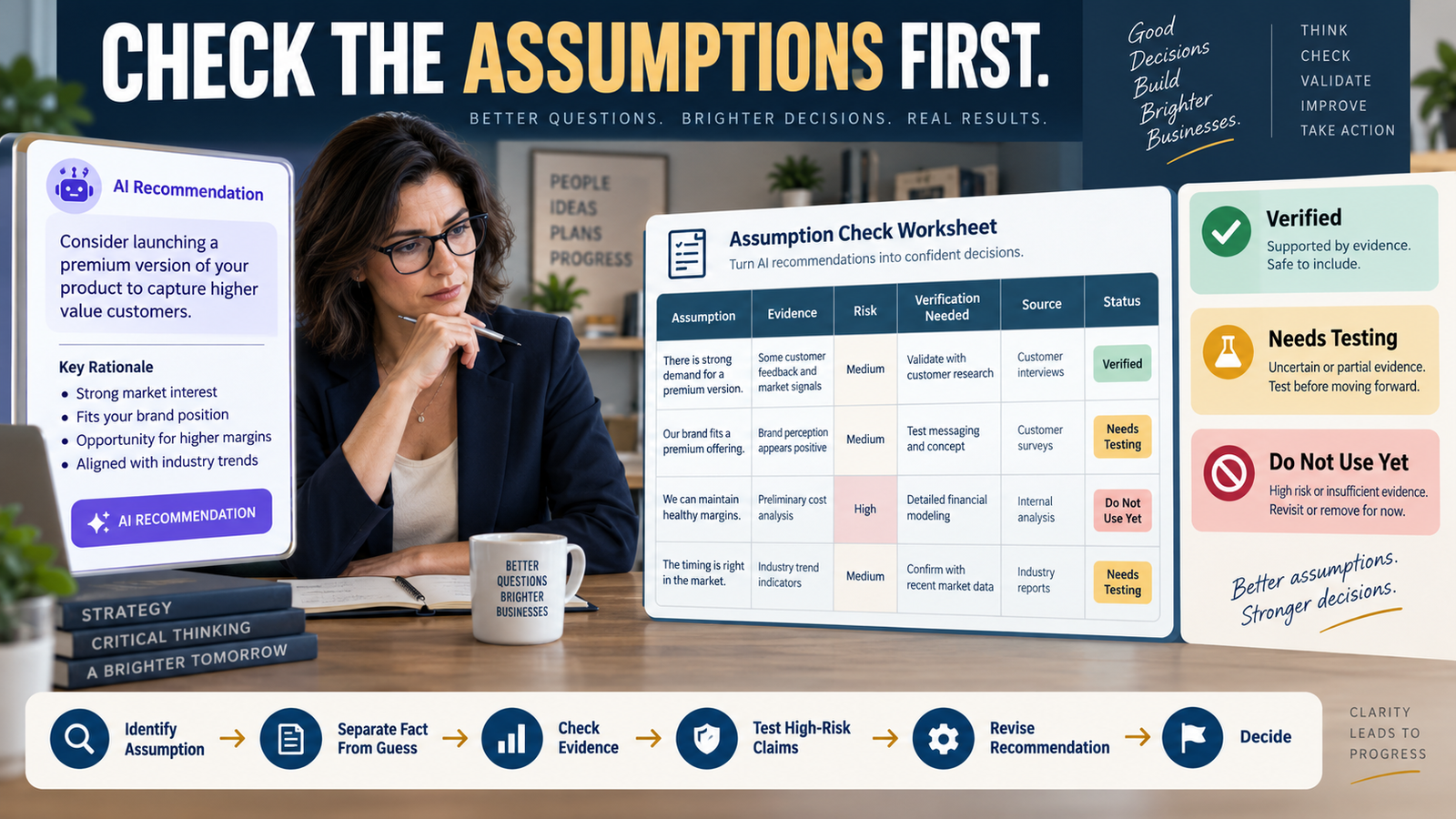
AI can produce a recommendation that sounds complete even when several parts of the recommendation depend on assumptions. That does not automatically make the recommendation bad. The problem begins when an assumption is mistaken for a verified fact. Imagine asking: “Which email platform should I choose for my small online business?” AI may recommend one…
-
How to Create a Reusable AI Project Brief So You Stop Re-Explaining Your Business Every Time
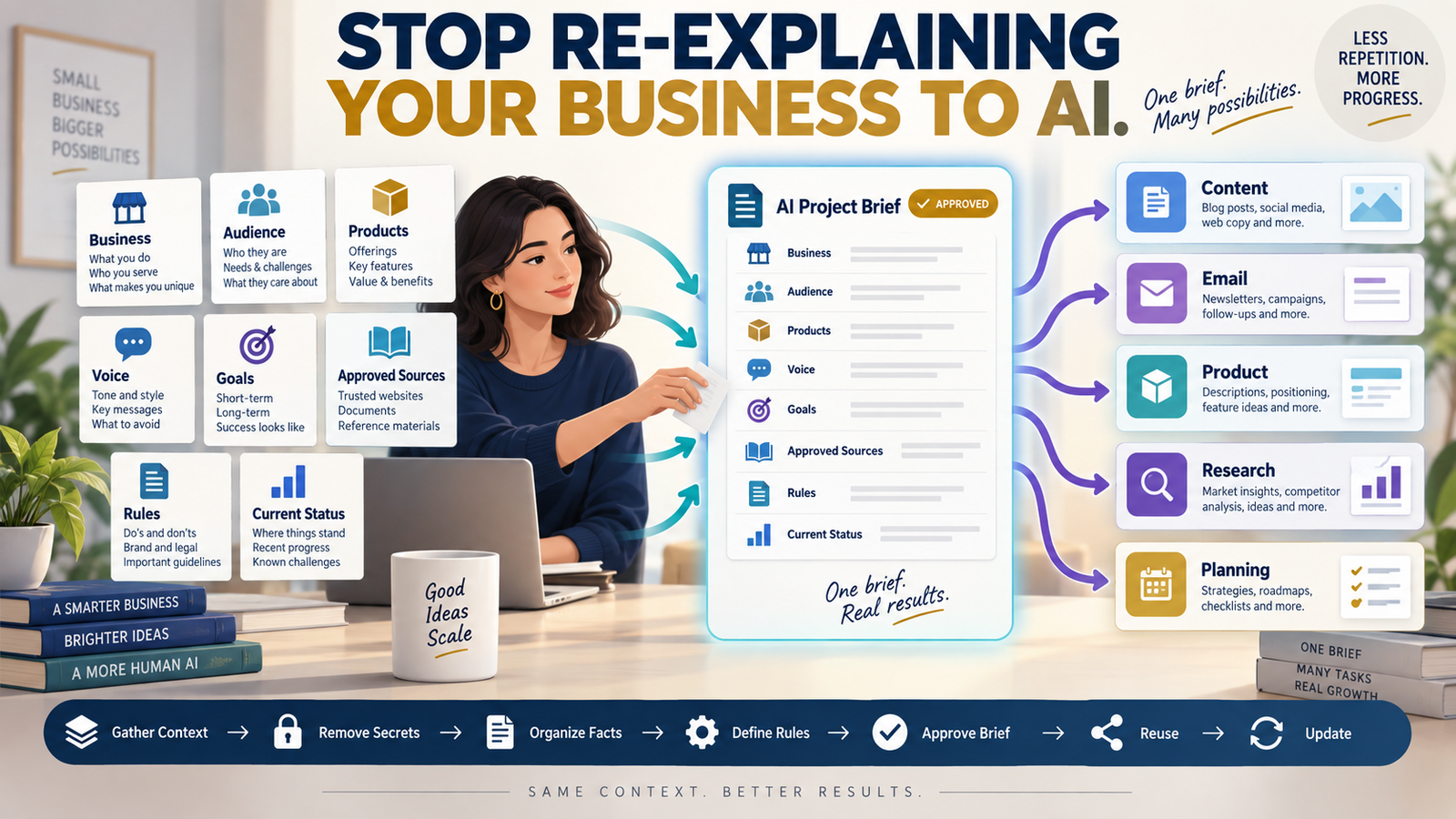
One of the most repetitive parts of using AI for business is explaining the same background information again and again. You start a new conversation and need to explain: Then a week later you start another project and repeat much of the same explanation. A better approach is to create a reusable AI project brief.…
-
How to Build an AI Content Source-Verification Log So Important Claims Stay Traceable
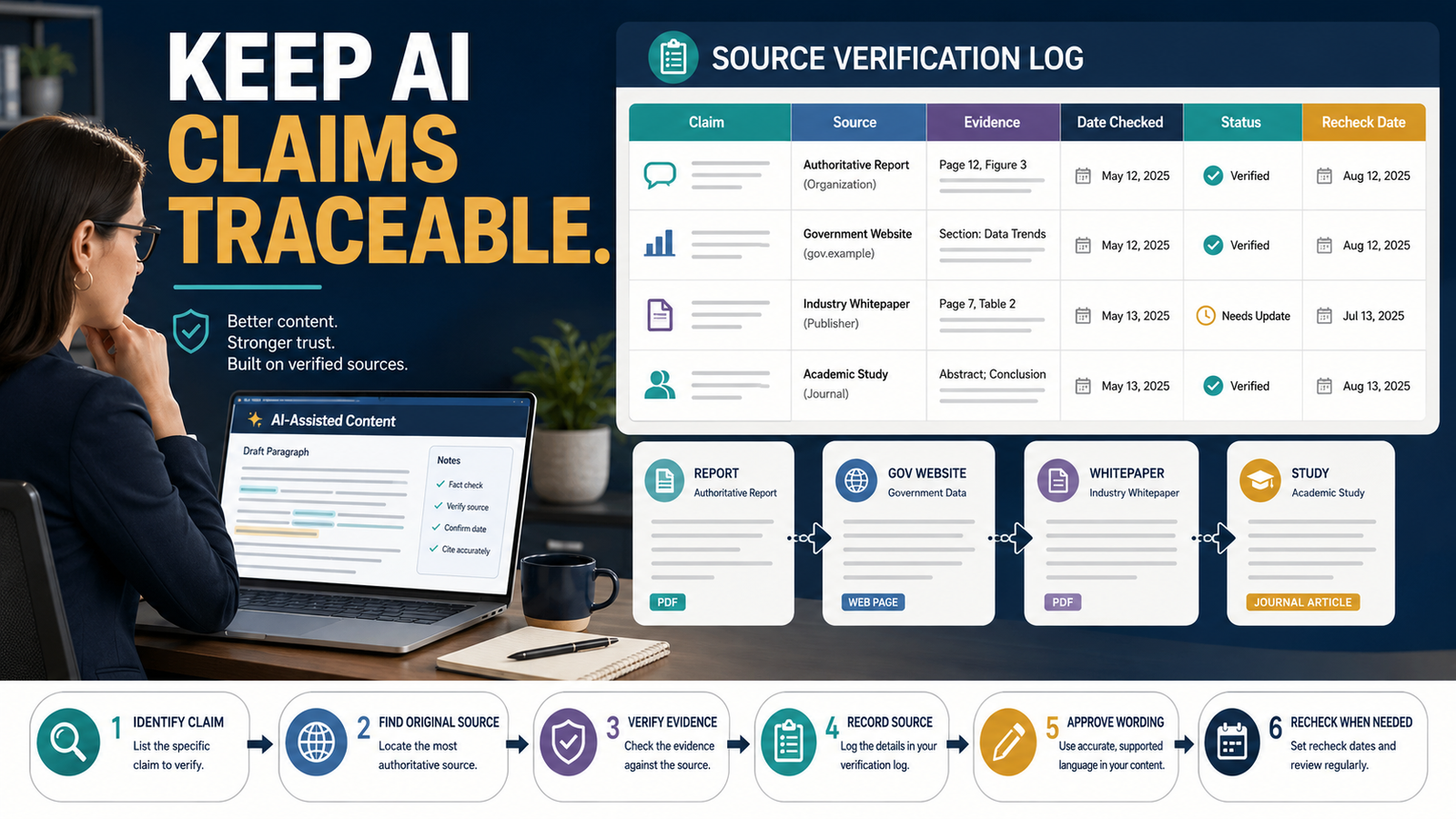
AI can help you research, organize, draft, compare, and explain information much faster than doing every step manually. But speed creates a new responsibility. When an AI-assisted article contains a price, statistic, feature claim, policy statement, date, quotation, software instruction, or other fact that matters, you should be able to answer a simple question: Where…
-
How to Turn Real Customer Support Questions Into a Useful Digital Product FAQ With AI
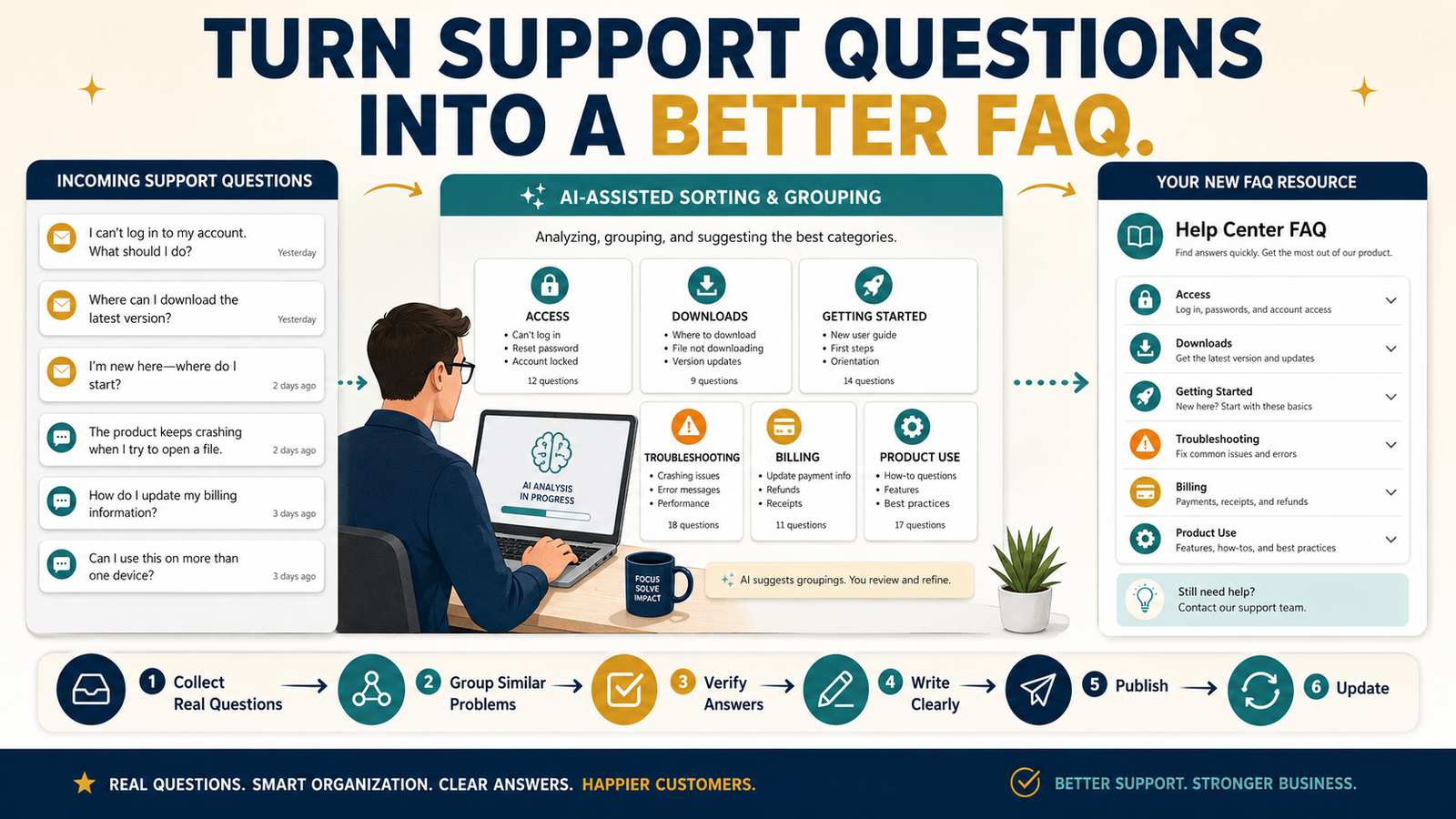
A good digital-product FAQ should not begin with a list of questions you imagine customers might ask. It should begin with the questions customers actually ask. When several buyers have trouble finding a download, understanding the first step, accessing a bonus, opening a file, or knowing what a feature means, those questions are useful business…
-
How to Fact-Check AI-Generated Content Before You Publish It
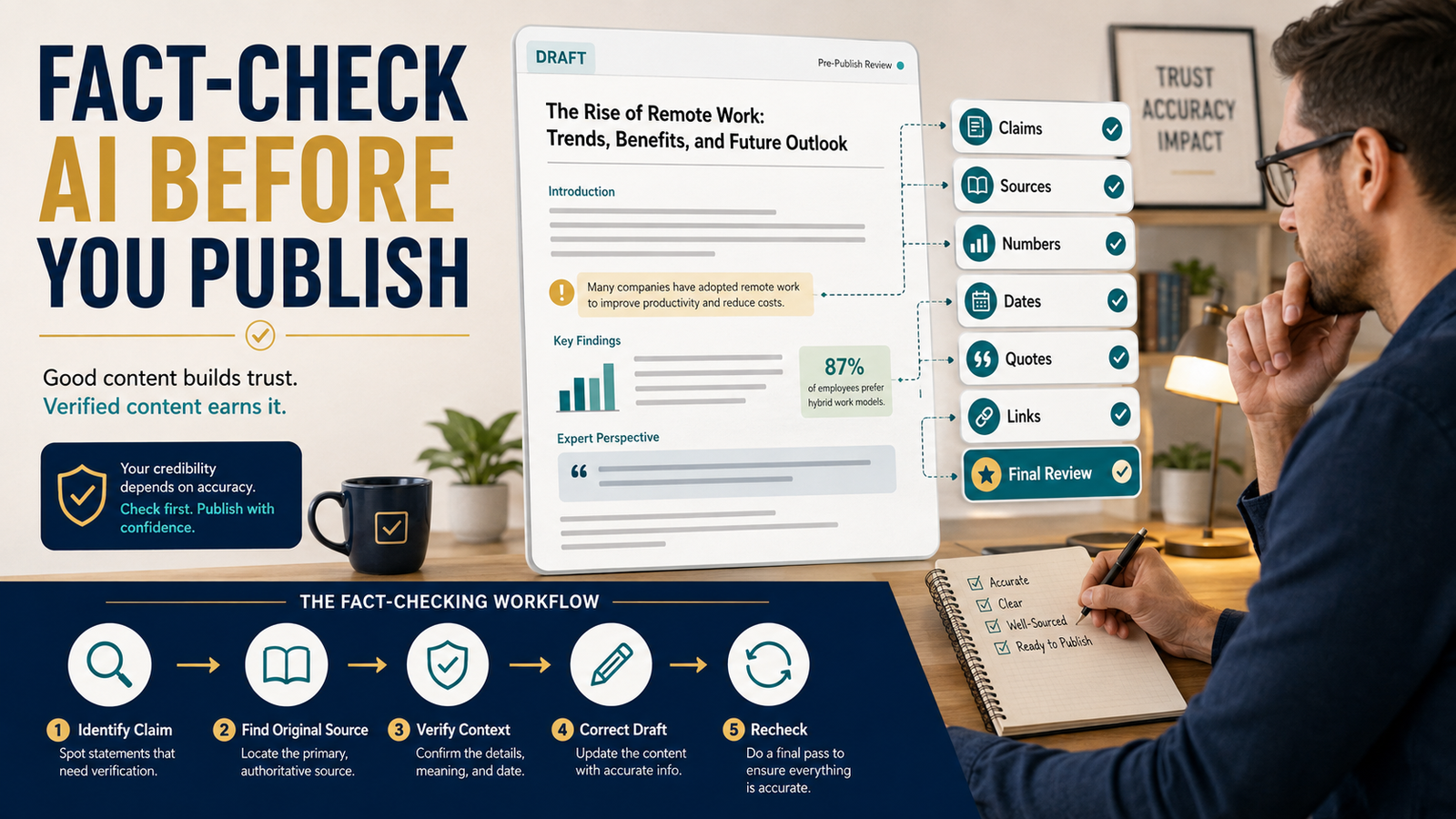
AI can help you organize ideas, produce a first draft, explain a complicated subject, or speed up repetitive writing tasks. What it cannot do is remove your responsibility to make sure the finished content is accurate. That matters because an AI-generated sentence can sound polished and still contain the wrong date, an outdated feature, an…
-
How to Use AI to Turn Website Traffic Data Into a Simple Monthly Content Action Plan
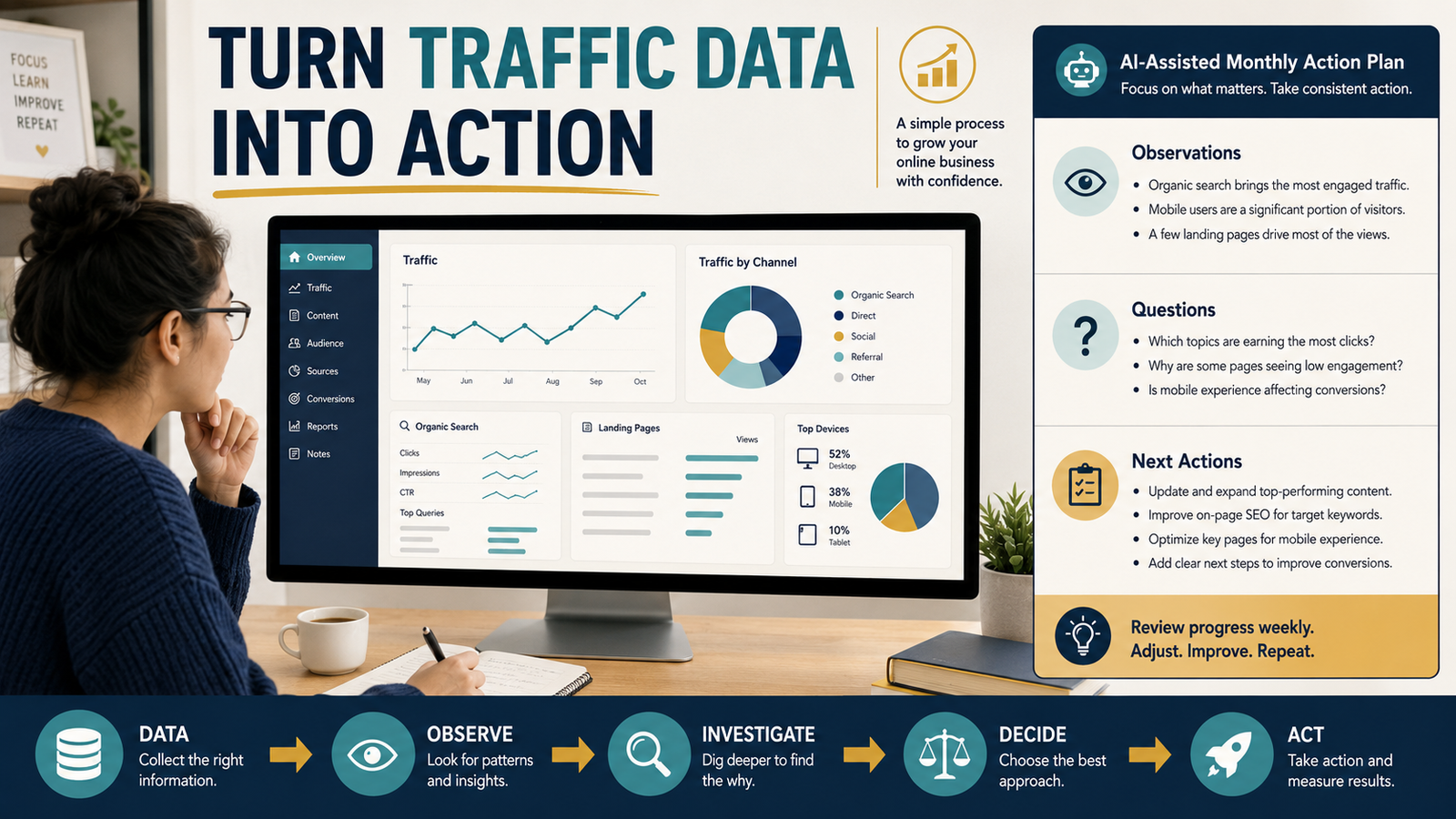
Website analytics can tell you what happened, but beginners often get stuck at the next question: What should I actually do with the numbers? A practical way to use AI is not to hand it your analytics and ask for “SEO advice.” Instead, give it a small, clearly defined set of traffic data and ask…
-
How to Create a Customer Avatar With AI Without Inventing Customer Problems
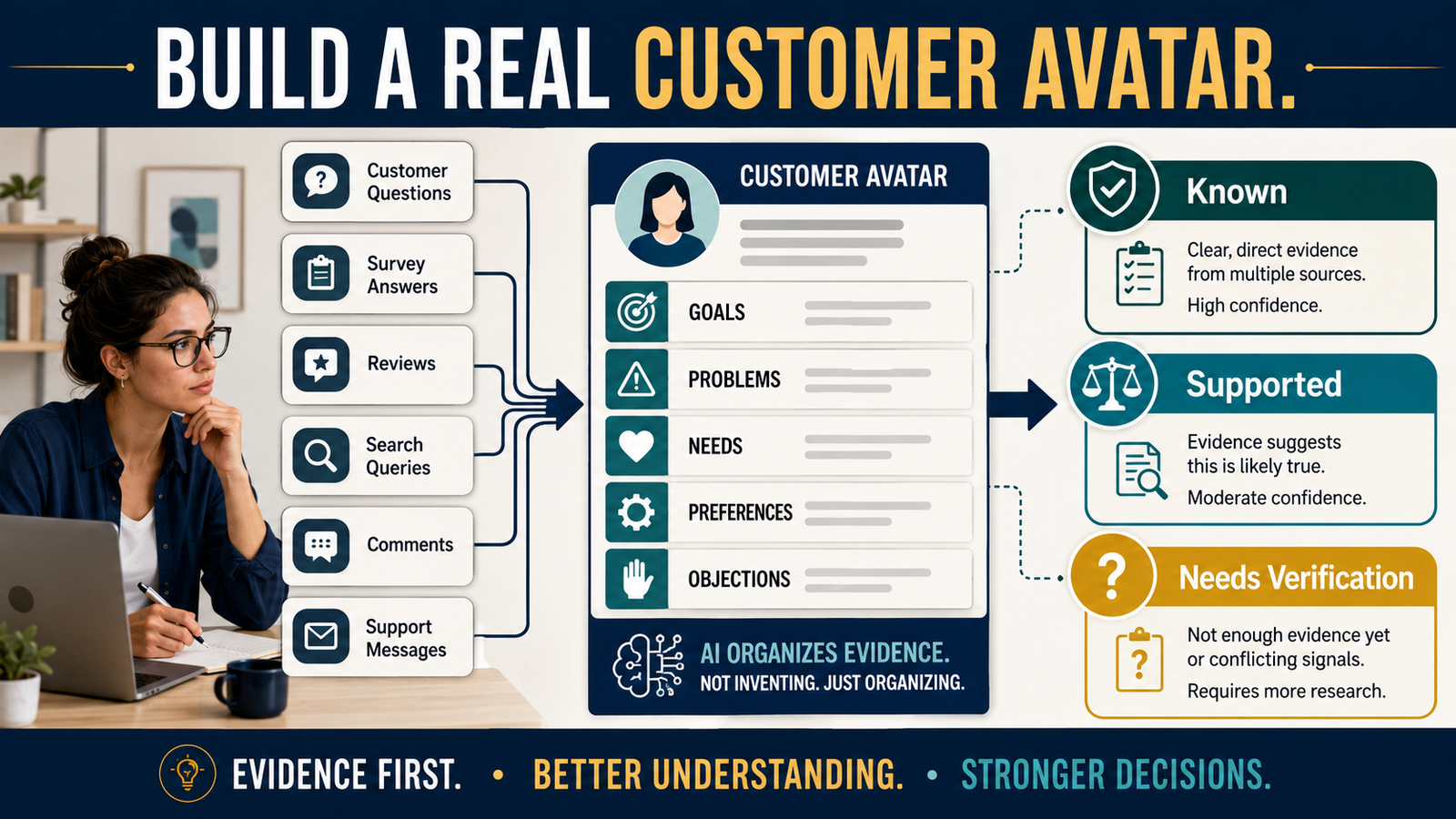
AI can help you organize customer research, identify patterns, summarize repeated questions, and turn scattered information into a useful customer avatar. What it should not do is invent the customer. That distinction matters. A weak approach asks AI: Create my ideal customer avatar for a digital product about starting an online business. The AI can…
-
How to Create an SOP With AI for the Business Tasks You Repeat
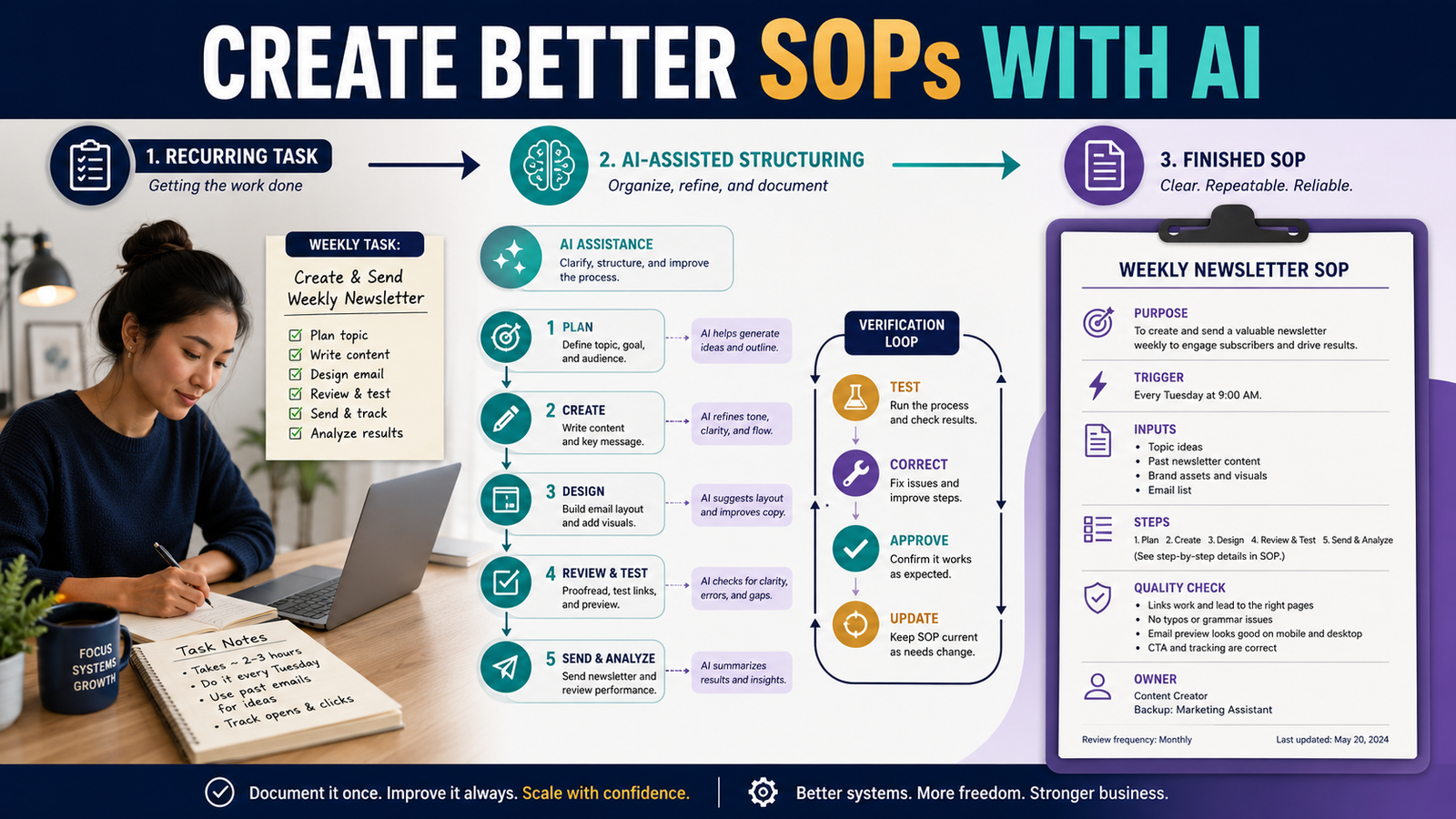
If you perform the same online-business task more than a few times, there is a good chance it should be documented. A standard operating procedure, usually called an SOP, explains how to complete a recurring task correctly without depending on memory. AI can make creating an SOP easier because it can help organize rough notes,…