Latest posts
-
How to Create AI Task Boundary Rules So the Model Does Not Quietly Expand the Job You Gave It
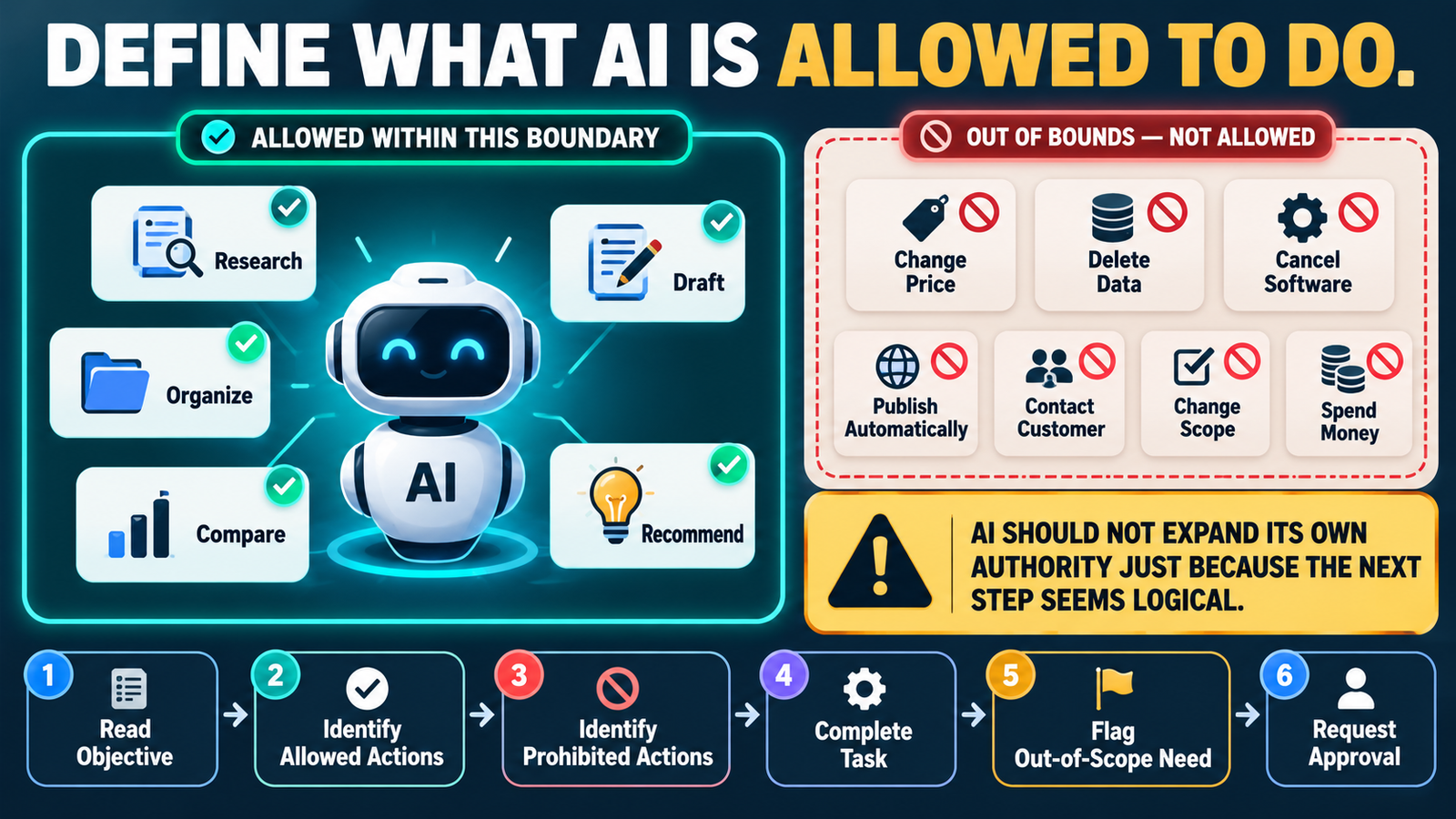
AI can be extremely useful when the task is clear. The problem often begins when the task changes while the AI is working. You ask: “Compare these two software platforms.” The AI compares them. Then it decides: “Platform B is better, so you should cancel Platform A immediately.” That second step may sound logical. But…
-
How to Create an AI Handoff Record So the Next Session Does Not Have to Reconstruct the Entire Project
One of the hidden costs of using AI for a large project is restarting. You work through: Then the session ends. A few days later, you open a new chat and write: “Continue where we left off.” The new session may not have enough context to know: The result is often repeated work. A simple…
-
How to Create an AI Handoff Record So the Next Session Does Not Have to Reconstruct the Entire Project
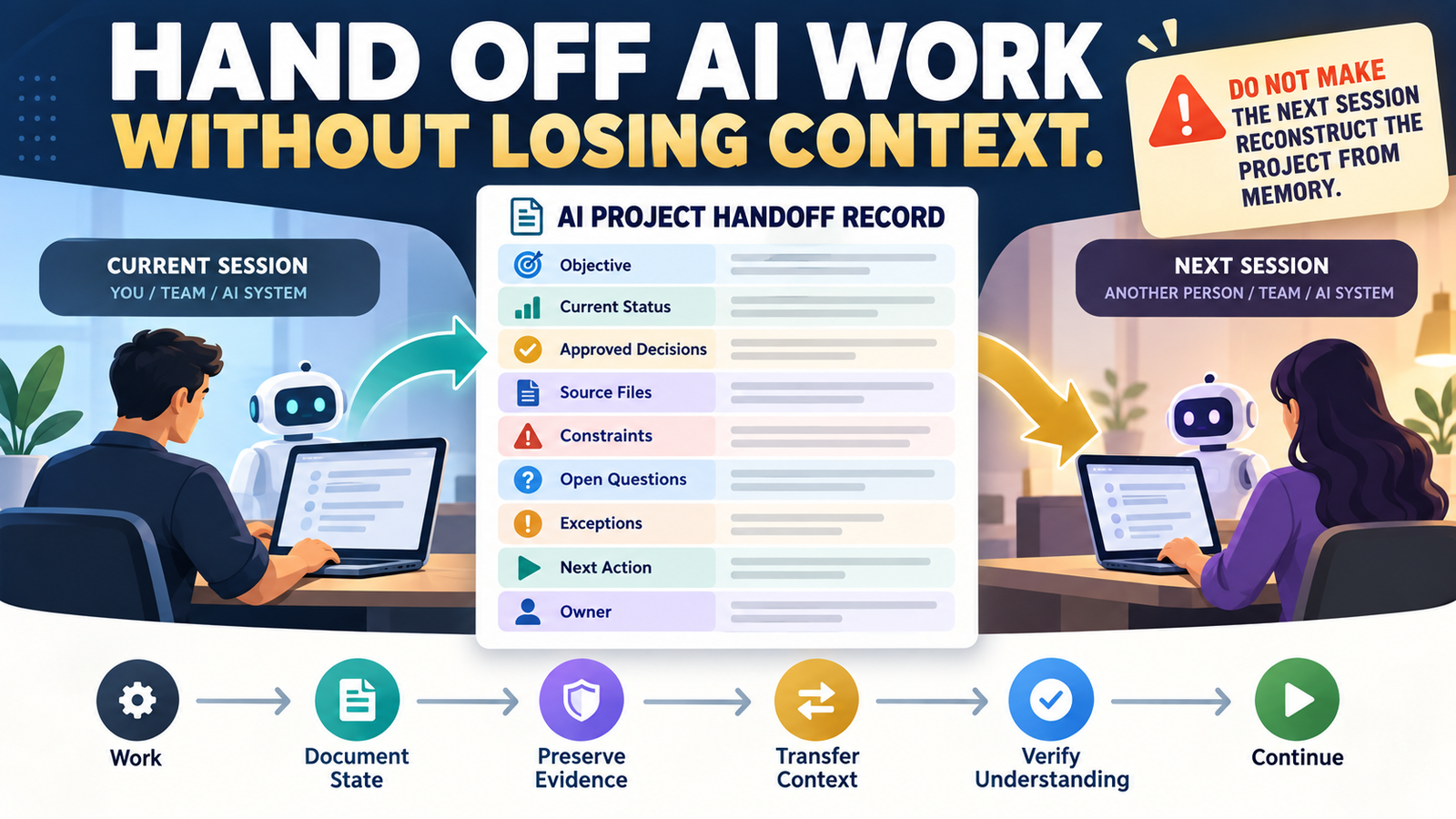
One of the hidden costs of using AI for a large project is restarting. You work through: Then the session ends. A few days later, you open a new chat and write: “Continue where we left off.” The new session may not have enough context to know: The result is often repeated work. A simple…
-
How to Create an AI Exception Queue So Unusual Outputs Do Not Get Lost in a Normal Workflow
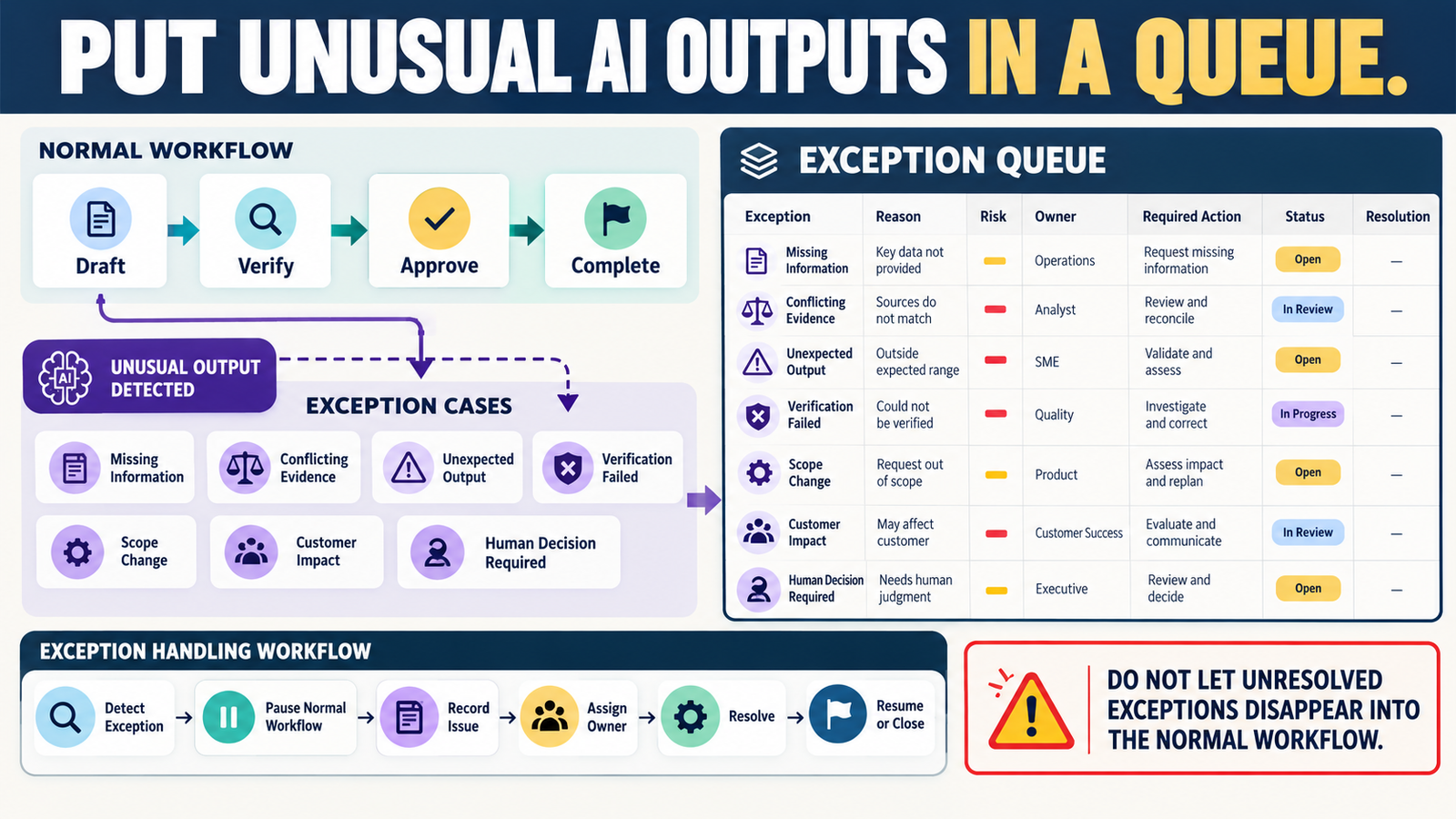
A repeatable AI workflow should handle normal situations efficiently. For example: Input → AI Draft → Verification → Human Review → Final Output Most tasks may move through that process without difficulty. Then something unusual happens. The AI finds two credible sources that disagree. A required fact cannot be verified. A recommendation would affect a…
-
How to Create an AI Fact Reverification Schedule So Verified Information Does Not Quietly Become Outdated
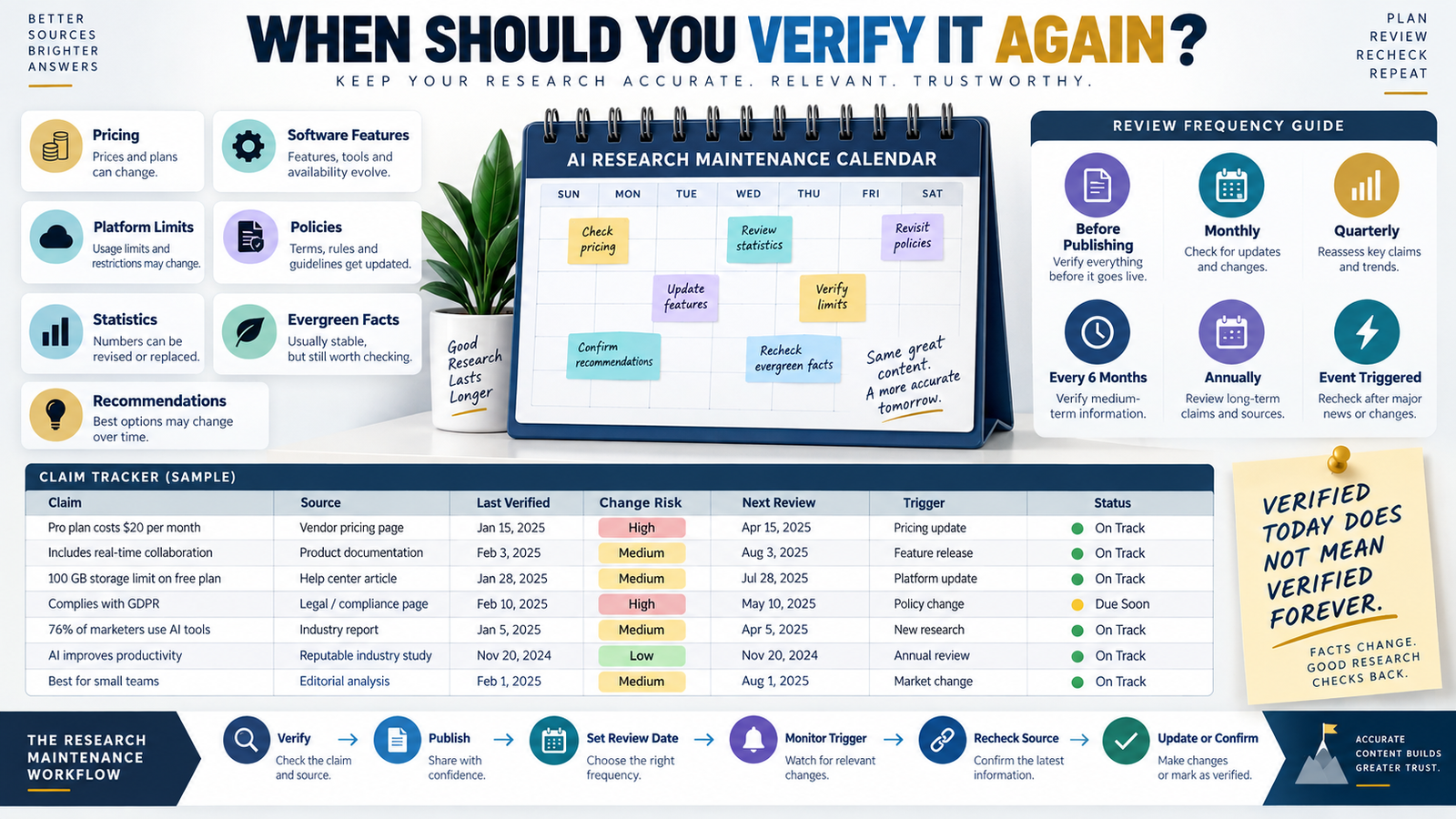
Verifying an AI-generated claim once does not guarantee that the claim will remain correct forever. Suppose you verify: Software Plan A costs $29 per month. The statement is accurate today. Six months later, the company changes its plans. Your original research was not wrong. It became outdated. This is a common problem with evergreen AI-assisted…
-
How to Create an AI Contradiction Log When Two Sources Give You Different Answers
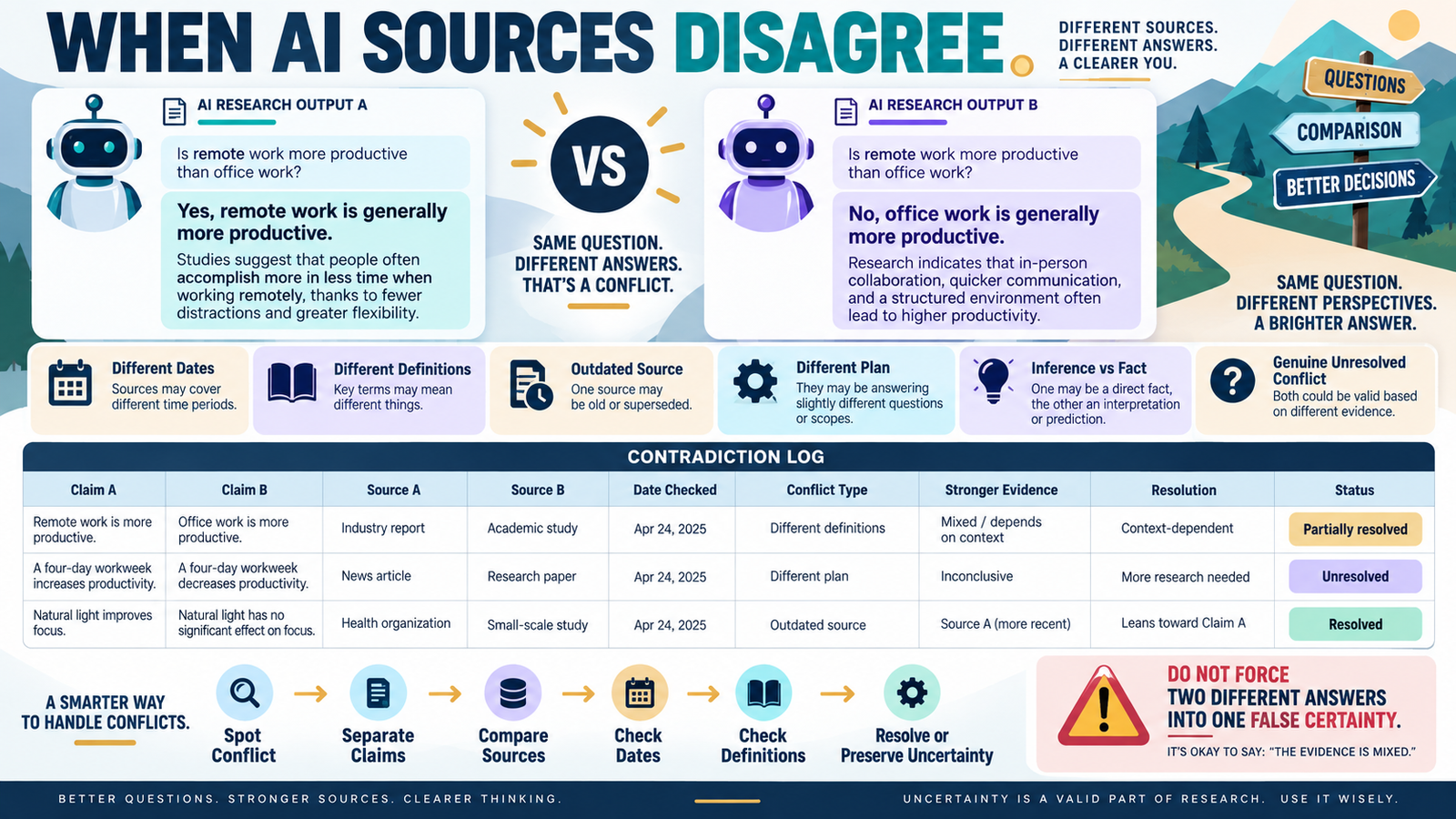
AI research becomes much harder when two credible-looking answers disagree. You ask: “How much does this software cost?” Source A says: $49 per month. Source B says: $99 per month. Or: One article says a feature is included. Another says it is available only on a higher plan. The easiest response is to choose the…
-
How to Create an AI Approval Matrix So the Model Knows What It Can Do and What You Must Approve
AI can perform many useful business tasks without creating much risk. You might ask it to: Those tasks are generally easy to review and easy to reverse. Other tasks are different. Imagine asking AI to: Those decisions should not be treated like headline brainstorming. A simple AI approval matrix gives each type of task an…
-
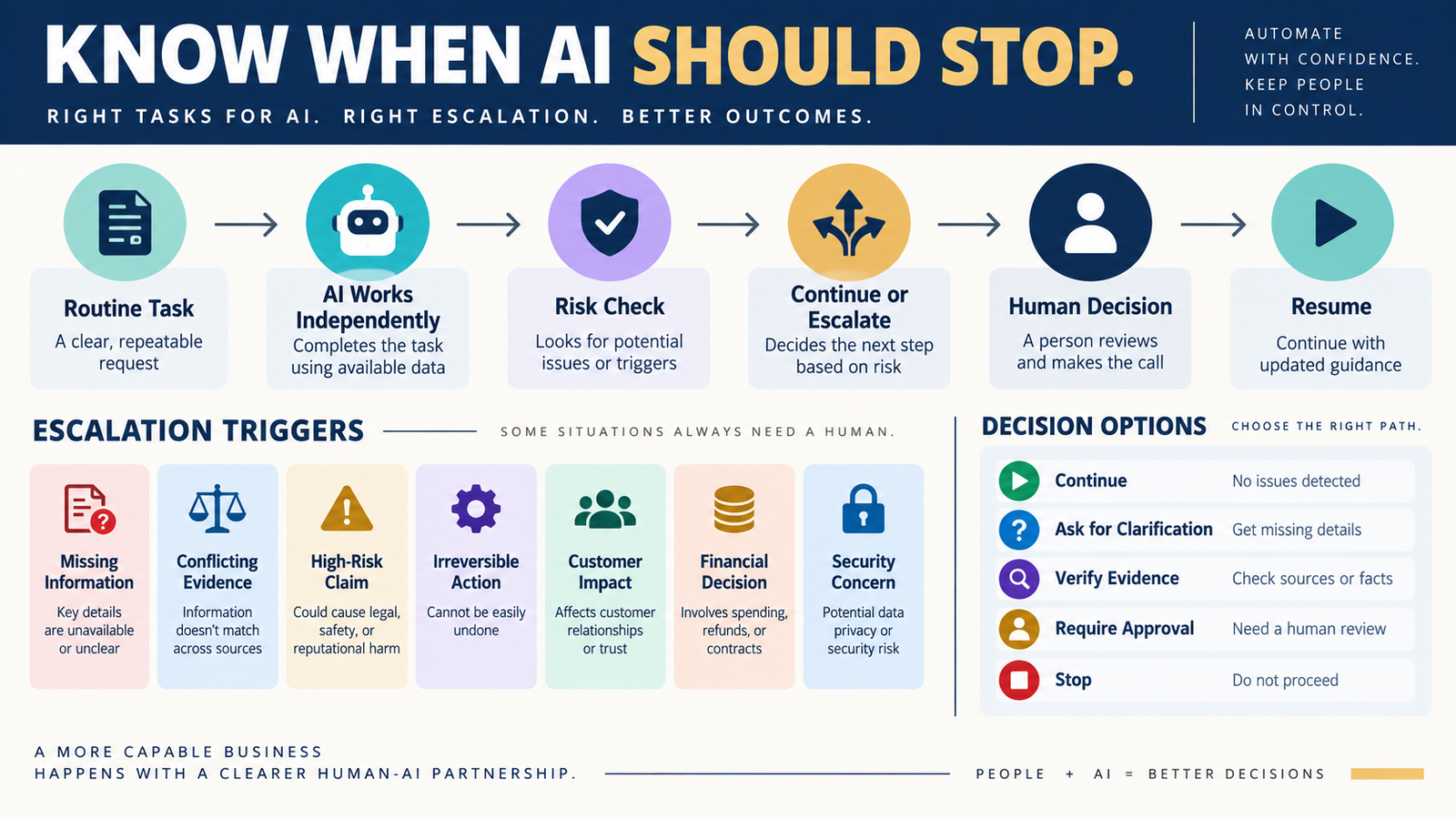
How to Create AI Escalation Rules So the Model Knows When to Stop and Ask for Human Judgment
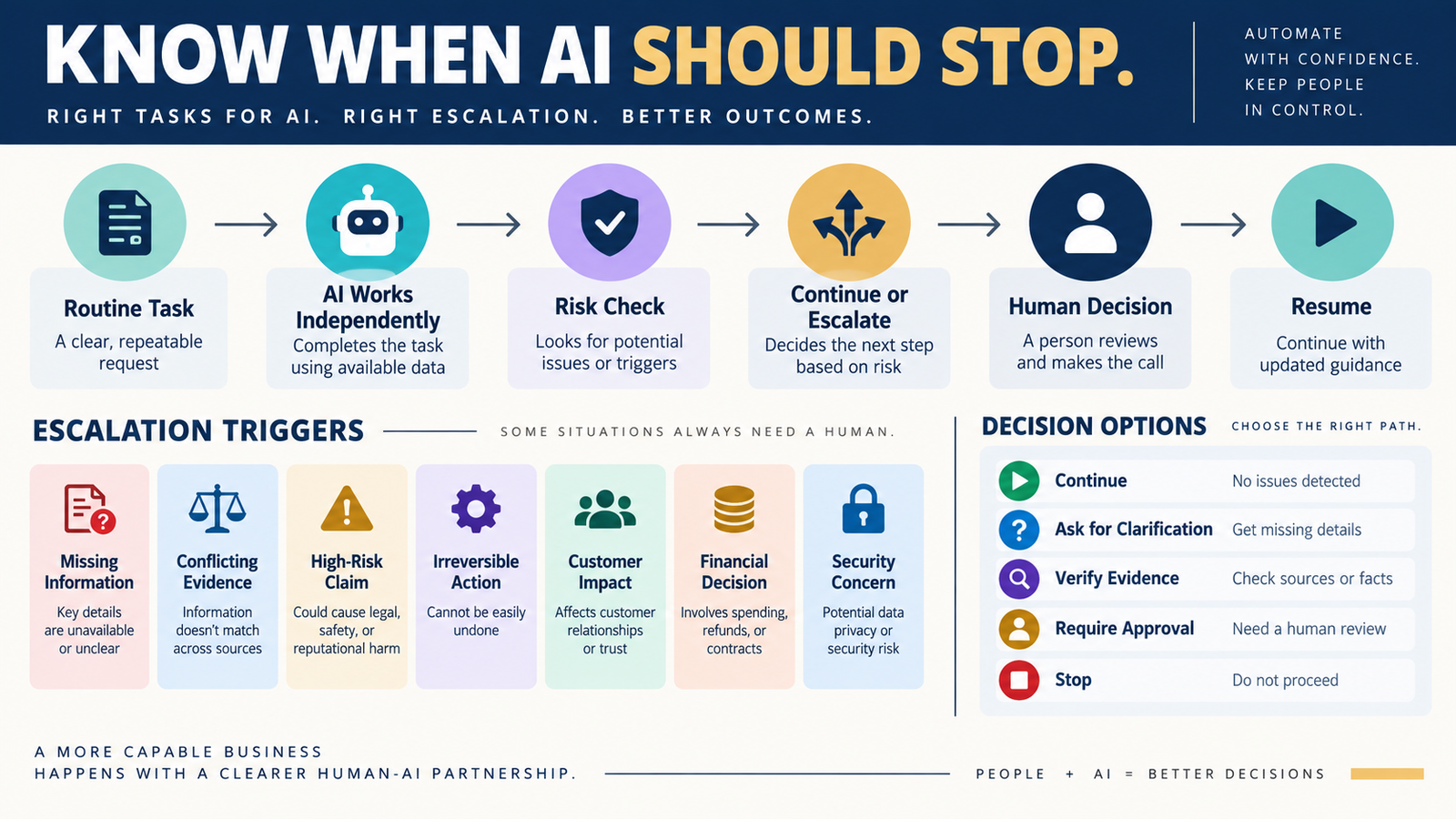
One of the easiest ways to misuse AI is to treat every task as though the model should keep going until it produces a final answer. Sometimes that is appropriate. If you ask AI to: there may be little reason to interrupt the workflow. Other situations are different. Suppose AI discovers: Continuing confidently can make…
-
How to Create an AI Confidence Labeling System So Uncertain Information Does Not Look Like Verified Fact
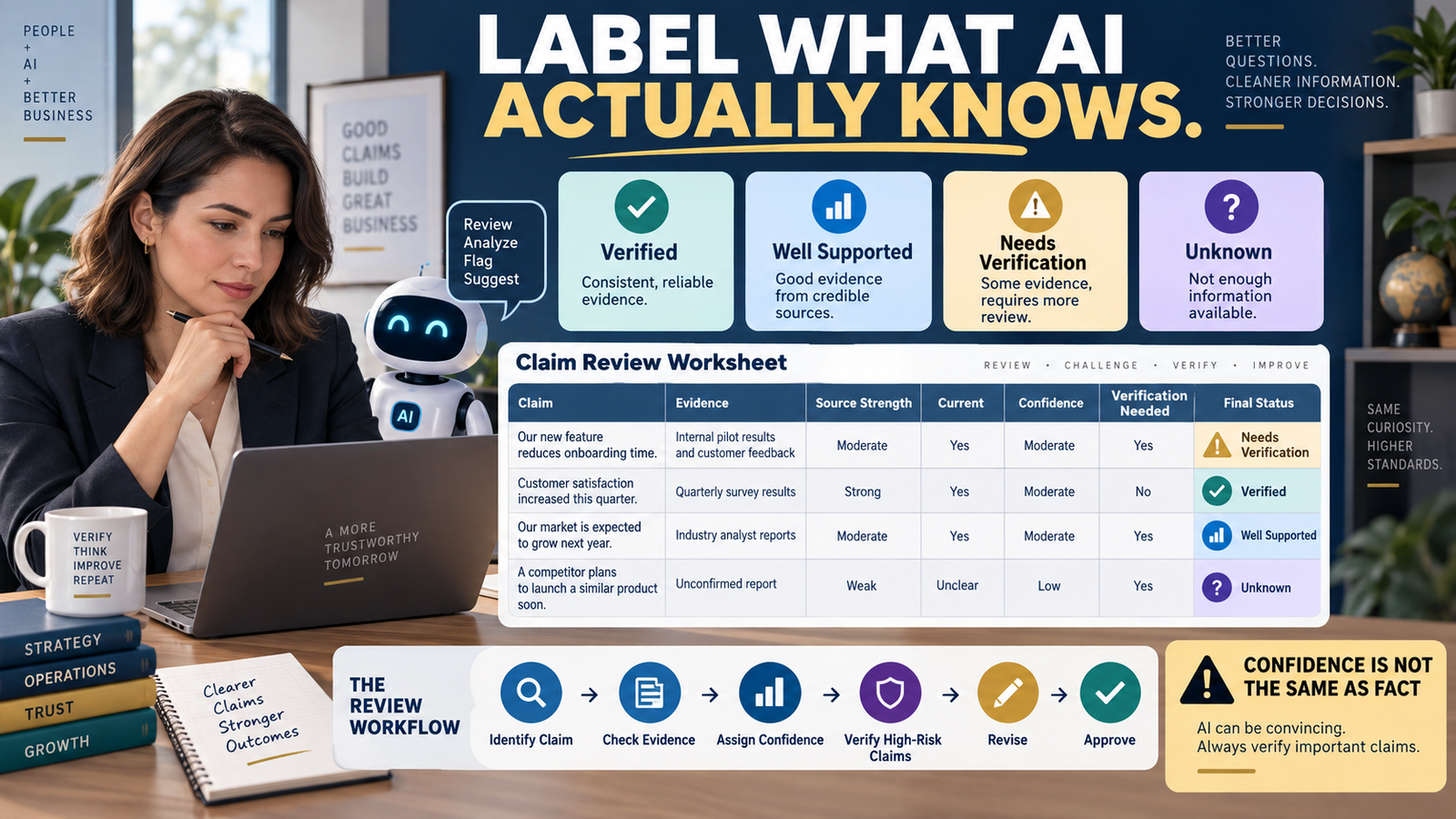
AI often writes uncertain information in the same polished tone it uses for well-supported information. That creates a problem. A statement based on: can sound almost identical to a statement based on: If you are using AI for business decisions, research, articles, comparisons, or product planning, those differences matter. A simple AI confidence labeling system…
-
How to Create an AI Error Log So You Stop Fixing the Same AI Problems Repeatedly

One AI mistake is usually easy to correct. A repeated AI mistake is different. If you regularly use AI for: you may notice the same problems appearing again. Perhaps AI repeatedly: The normal response is to fix the individual output. That solves today’s problem. It does not necessarily prevent tomorrow’s version of the same problem.…